
Sacred site
Pret Shila
The rocky hill about 8 km north of Vishnupad, kept for ancestors who left before their time — where the Gaya Mahatmya says Dharmaraj himself set the Preta Parvat, and where a pind and a handful of sattu at the Dharmashila release the departed from the pret-yoni.
The debt we owe our ancestors
This rite is one way a family repays the Pitru Rin — the debt owed to those who gave us everything. Tell us your family's intention and we'll plan every step together, gently, on a call.
What the hill is
Pret Shila — the rock of the pretas, also called Preta Parvat — is a steep granite hill about eight kilometres north of Vishnupad, twenty to twenty-five minutes by road. Of all the vedis of the Gaya kshetra this is the one kept for a death that came before its time: an accident, drowning, fire, snakebite, a life ended by one's own hand, a death far from home, or one after which the observances were never completed. The tradition holds that such a soul has not yet taken its place among the pitru, and that the pind offered here is what gives it that place. Families with no such loss in the lineage do not usually come here at all.
What the Gaya Mahatmya says
The Gaya Mahatmya of the Vayu Purana counts Pret Shila among the tirthas of Gaya and gives its meaning in a single line: Dharmaraj — Yama — established the Preta Parvat on the left foot of the great Dharmashila that holds Gayasura down, with the Preta Kund beside it, and shraddh offered there frees the pitru from the state of preta. Rama and Lakshman are said to have bathed in Brahma Kund and offered pind for King Dasharatha here. The temple on the summit, to Yama as Pretraj, was rebuilt in 1787 by Ahilyabai Holkar of Indore — the same queen who rebuilt the Vishnupad temple.
The Dharmashila, and the sattu
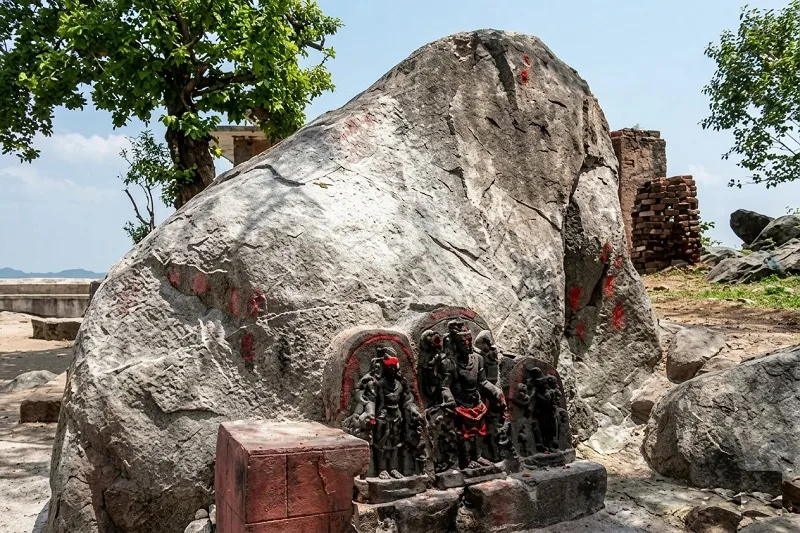
At the top, in the open, stands the rock itself — a great grey boulder marked with sindoor, with carved deities set at its foot, as in the photograph above. Cut into it is the footprint the tradition calls Brahma's, with three lines across it, and a crack that the elders say runs down to Yamlok. Here the pind is offered in the departed's name, and then comes the one act that belongs to Pret Shila alone: the karta takes sattu mixed with black til and scatters it at the rock while circling it five times, with the words the pandas teach — 'उड़ल सत्तू पितर को पैठ हो', let the sattu that flies reach the ancestors. A house in sutak does not eat sattu, and a family carrying an untimely death is held to be in a sutak that never closed. The sattu given here is what closes it; the family eats sattu again only after.
Brahma Kund, and the vedis around it
At the foot of the hill lies Brahma Kund, where the family bathes and gives the first pind of the day before the climb. Ram Shila, Ram Kund and Kakbali are close by, and in the seventeen-day Pitru Paksha sequence these five — Pret Shila, Brahma Kund, Ram Shila, Ram Kund and Kakbali — are kept together on one day, early in the order, right after the Falgu tarpan and before the family comes to Vishnupad. The reasoning is simple: what is given here is understood to open the way, so that the pind offered later at the principal vedis is received for a soul no longer held back.
The climb, and when to go
From Brahma Kund it is 676 stone steps to the summit; a doli can be hired at the foot for elders. Start at first light. The vedi works with the sun — the pandas come down before dusk and nobody stays on the hill after dark. Carry water and a dry change of clothes for the kund. In Pitru Paksha the steps are crowded through the morning; the rest of the year the hill is quiet and the rite is done in a morning. Many families also leave a photograph of the departed at the feet of Vishnu in the temple before they come down.
Sacred places of Gaya
Where Pind Daan in Gaya is performed
Vishnupad Mandir
The principal temple of Gaya, marking the footprint Lord Vishnu pressed into the rock to still the demon Gayasura. Almost every Pind Daan in Gaya begins here, at the feet of the Lord.
Akshay Vat
The eternal, ever-living banyan tree, blessed by Mata Sita herself. Pind Daan in Gaya is held incomplete until the final Sufal is taken beneath the Akshay Vat — where Lord Rama too offered pind for King Dasharatha.
Falgu River
The sacred river of Gaya, bound to the ancestral offerings of Mata Sita. Tarpan on the Falgu opens the rite, carrying water and til to the departed.
Pret Shila
The rocky hill 8 km north of Vishnupad, for souls that left the world unnaturally — by accident, or before their time. A pind and a handful of sattu at the Dharmashila release the departed from the pret-yoni and set them on the path to liberation.
The story of Gaya
The story of Gaya — from the Vayu Purana
The Vayu Purana tells how the great asura Gayasura performed such fierce penance that his very body became holy — so holy that whoever touched it, or died upon it, attained moksha at once. Heaven filled, hell emptied, and the order of the worlds was undone.
To restore that order, the gods asked Gayasura for his body as the ground for a great yajna. He agreed, and lay down across the land now called Gaya. When his body still trembled, Lord Vishnu set his foot upon a stone slab to hold him still — the footprint the Vishnupad Temple is built upon to this day.
In return, Gayasura begged a boon: that this land become the supreme place on earth for shraddh and Pind Daan, where the offerings of the living would liberate the dead. Vishnu granted it — and so the Gaya Mahatmya promises that Pind Daan here frees generations of ancestors.
It is the Vayu Purana that carries this Gaya Mahatmya — and it is from that same Vayu that Vayu Pind Daan takes its name and its purpose.
Tell us what you need
What every ritual includes
- Pandaji's word on whether Pret Shila is needed
- Sattu, black til & pind samagri arranged
- Brahma Kund bath & first pind before the climb
- Doli for elders arranged at the foot
- Vehicle from Vishnupad & back (20–25 min)
- Placed early — before Vishnupad & Akshay Vat
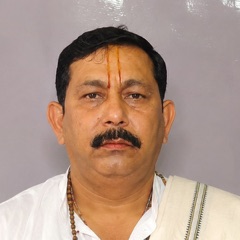
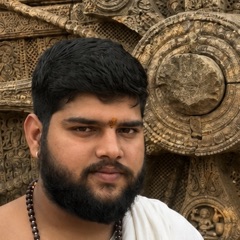
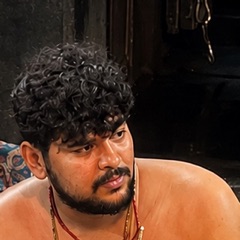
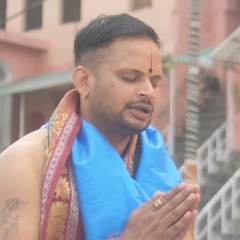
Our Gaya Pandas
The Tirth Purohits who lead your rites
Verified Gayawal Pandas of Gaya who perform your Pind Daan and Shraddha with full shastra vidhi.
Questions families ask
Frequently asked questions
Who needs to go to Pret Shila?
Families with an ancestor whose death was untimely or unnatural — accident, drowning, fire, snakebite, suicide, death away from home, or where the rites after death were never completed. If there is no such case in the lineage the Pandaji will normally not send you here. Tell him the situation plainly and let him decide.
How far is it, and how hard is the climb?
About 8 km north of Vishnupad, 20–25 minutes by road. From Brahma Kund at the foot it is 676 stone steps to the summit; elders go up by doli, hired at the foot. Go early — the vedi closes with the light.
Why sattu?
Sattu is the food a house in sutak does not eat, and a family carrying an untimely death is held to be in a sutak that never closed. Scattering sattu at the Dharmashila with the words 'उड़ल सत्तू पितर को पैठ हो' is what closes it — and it is done only here, at this one vedi.
Is Pret Shila part of the ordinary Gaya Pind Daan?
No. The ordinary rite is Falgu, Vishnupad and Akshay Vat. Pret Shila is added when the lineage carries such a death — that is the four-place Pind Daan, and the hill comes first in the day.
- When the Death Was Untimely: What the Family Should Do, and the Place of Pret Shila7 min read
- Nag Bali and Narayan Bali: Two Rites, One Name, and How to Tell Which Is Yours7 min read
- From Pret Yoni to Pitra Yoni: The Journey the Garuda Purana Describes8 min read
- The Vedis of Gaya: The Sacred Altars Where Pind Is Offered8 min read
Start here
Have a question? We're here to explain
You will do this once, for your mother and father. So the full vidhi must be done — never half. We perform every act before you, explaining each step, exactly as the Shastras prescribe. The cost is told to you upfront. First talk to us, then decide.
श्राद्ध केवल श्रद्धा का विषय नहीं।
यदि विधि शास्त्रों के अनुसार न हो, तो श्राद्ध पूर्ण नहीं होता। सच्ची श्रद्धा भी निष्फल रह जाती है।