

Ritual
Narayan Bali in Gaya
Narayan Bali is generally performed on the 11th day after an untimely or unnatural death. If it was not performed on the 11th day, it should be done in Gaya, the place of Lord Narayan - Lord Vishnu's footprint is in the Vishnupad Temple here. It can also be performed in Gaya if it was not done properly earlier. In Gaya it is performed at Dharmaranya or on the Falgu bank near Vishnupad.
Narayan Bali Puja Cost in Gaya
Which Narayan Bali vidhi does your family need?
Both Pramukh and Vistrit Vidhi include Shodasha Shraddha. Vistrit Vidhi, with an elaborate Shodasha Shraddha, is needed when the funeral and first-year rites were not performed, or the body was not found. Where the sixteen customary post-death shraddhas were already completed, Pramukh Vidhi is appropriate. Tell us which rites were performed and whether the body was recovered, so our pandits can guide your family before booking.
Pramukh Vidhi
₹31,000per familySamagri & Dakshina Included
For families whose sixteen customary post-death shraddhas were already completed. This is the Pramukh Narayan Bali vidhi, including Shodasha Shraddha. Brahmin Bhojan can be arranged separately at an additional cost.
- Asan (seating mats for the puja)
- Vishnu pujan
- Panchkalash - five-kalash worship
See photo
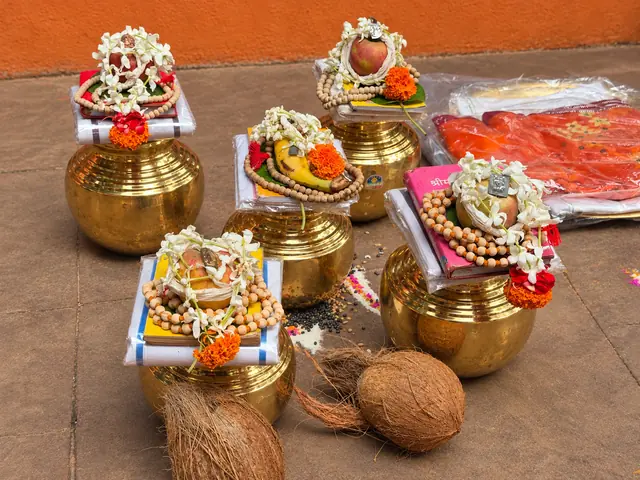
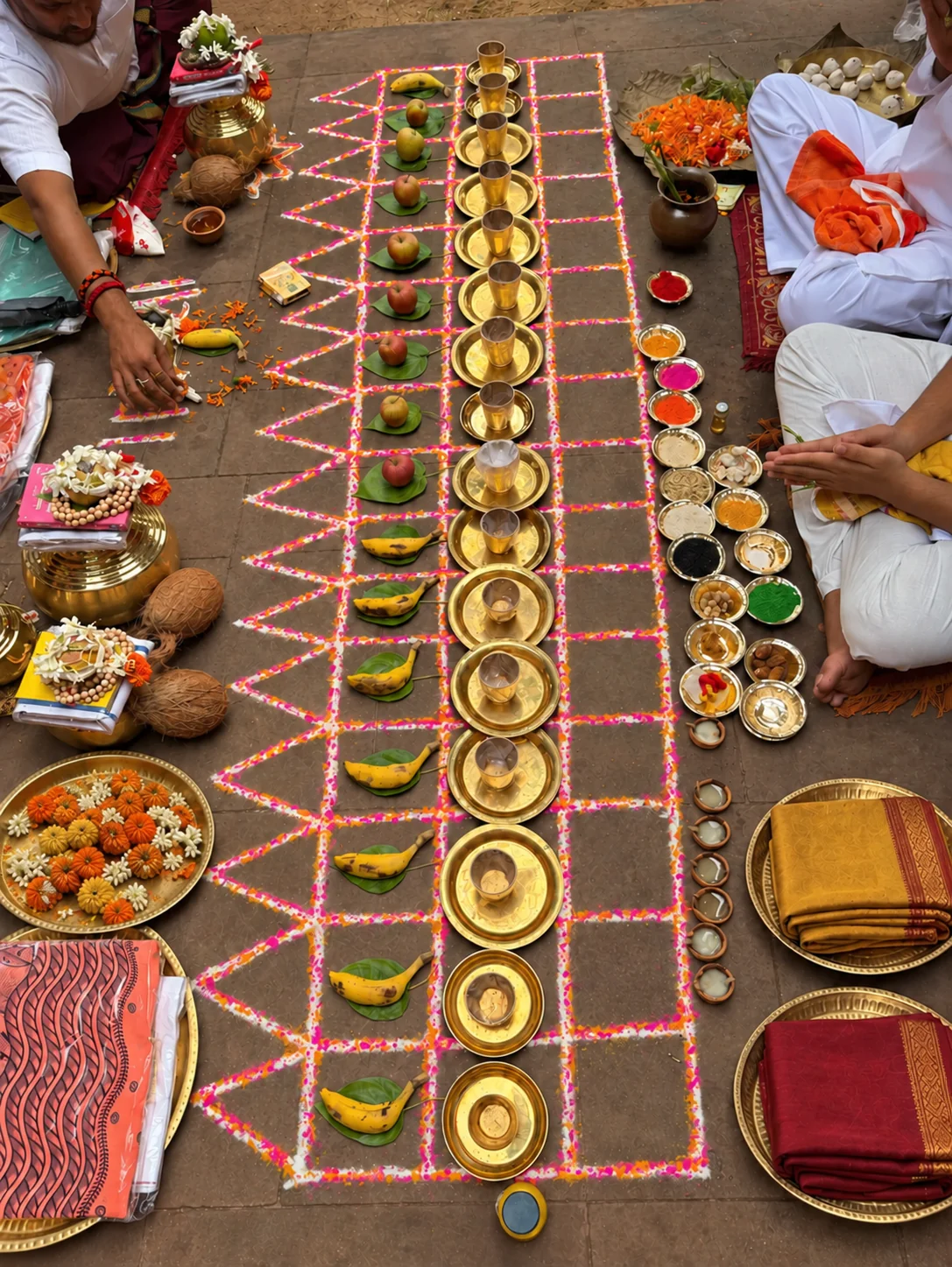
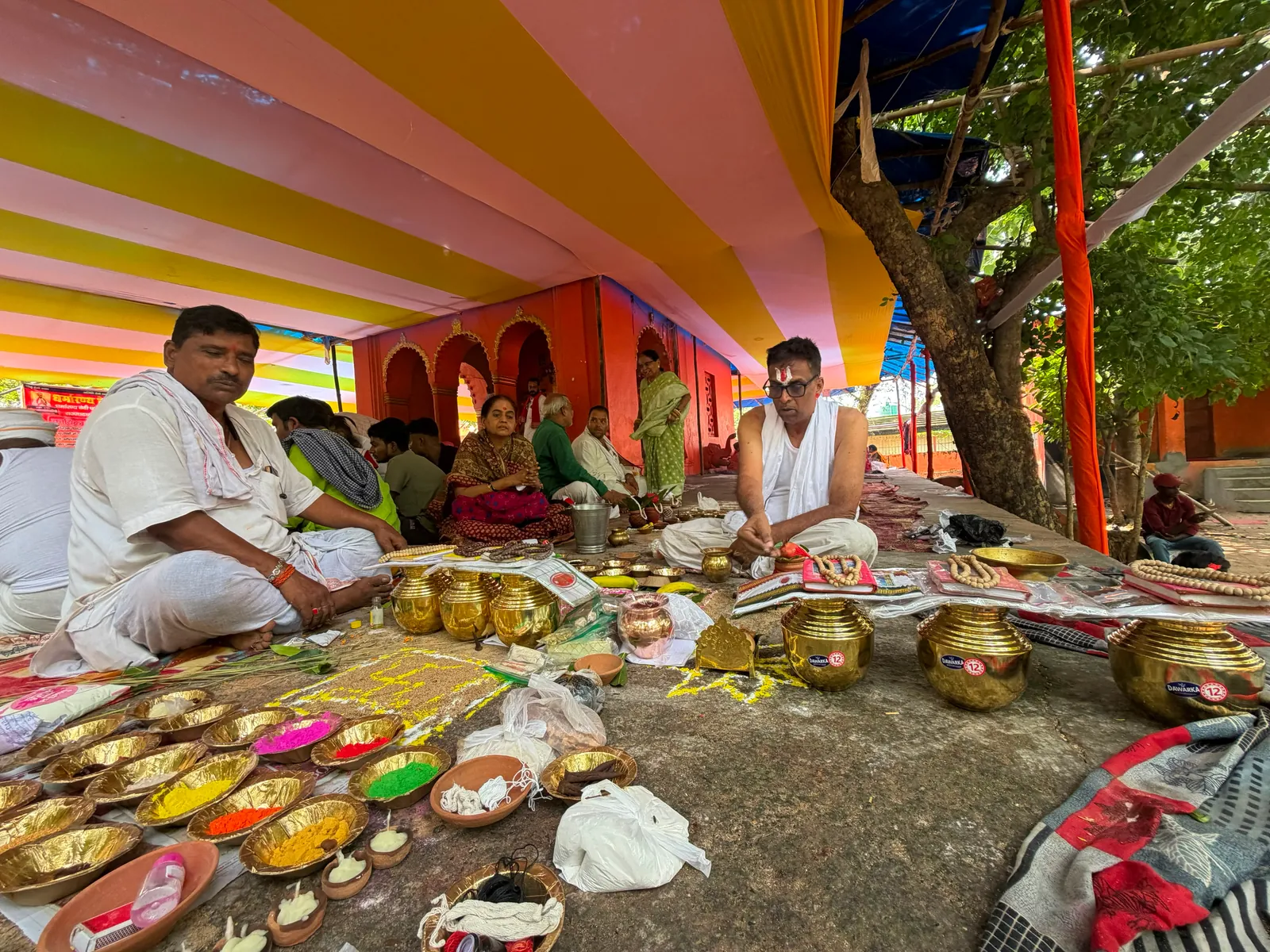
Five kalash representing Brahma, Vishnu, Mahesh, Preta and Yama during Vistrit Narayan Bali in Gaya - Shodash Shraddha - sixteen shraddha rites
See photo
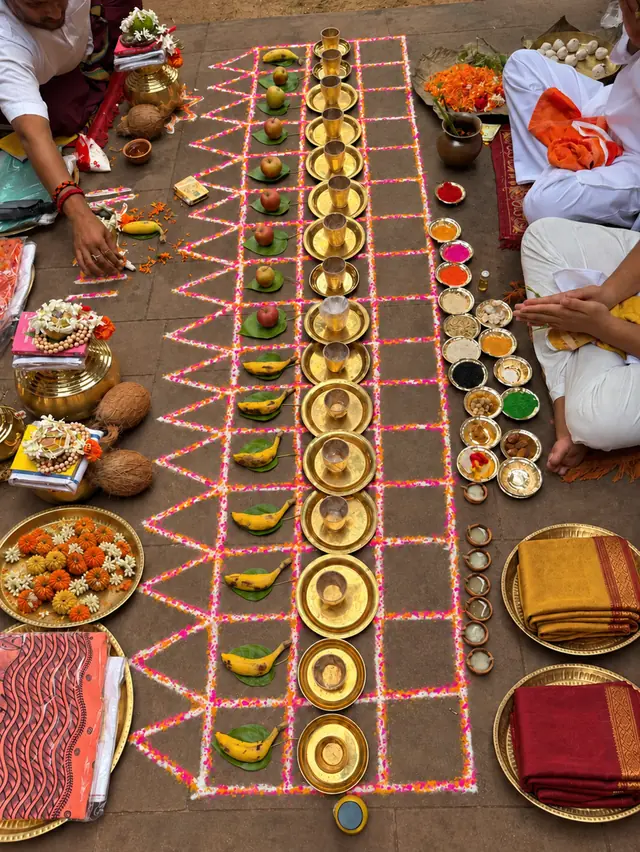
Shodash Shraddha preparations: vessels and offerings for the sixteen shraddha rites during Vistrit Narayan Bali in Gaya - Prescribed pratima vidhan
- Havan
- Pind Daan
Approx. time - about 4–5 hours
Where - Dharmaranya or the Falgu banks
Steps
- 1.Sankalp
- 2.Vishnu pujan
- 3.Panchkalash - five-kalash worship
- 4.Shodash Shraddha - sixteen shraddha rites
- 5.Prescribed pratima vidhan
- 6.Havan
- 7.Pind Daan
- 8.Tarpan and mantra-path
Crowd - Pitru Paksha - extremely crowded · other days - relatively calm
Optional
- Travel to Gaya
- Accommodation and meals
- Local transport, pickup and drop
- Brahmin Bhoj
- Gau Daan and Shaiya Daan
- Voluntary donations or gifts
Vistrit Vidhi
₹51,000per familySamagri & Dakshina Included
For cases where the funeral and first-year rites were not performed, or the body was not found. Includes the elaborate Shodasha Shraddha needed to fulfil those missing rites during Narayan Bali.
- Asan (seating mats for the puja)
- Vishnu pujan
- Panchkalash - five-kalash worship
See photo
Five kalash representing Brahma, Vishnu, Mahesh, Preta and Yama during Vistrit Narayan Bali in Gaya - Elaborate Shodasha Shraddha
See photo
Shodash Shraddha preparations: vessels and offerings for the sixteen shraddha rites during Vistrit Narayan Bali in Gaya - Prescribed pratima vidhan
- Havan
- Pind Daan
- Extended Narayan / dev pujan
- Additional mantra-path
- The related shraddh and closing rites
- Additional Brahmins participating, as needed
Approx. time - about 1 hour longer than the Pramukh Vidhi
Where - Dharmaranya or the Falgu banks
Steps
- 1.Sankalp
- 2.Vishnu pujan
- 3.Panchkalash - five-kalash worship
- 4.Shodash Shraddha - sixteen shraddha rites
- 5.Prescribed pratima vidhan
- 6.Havan
- 7.Pind Daan
- 8.Tarpan and mantra-path
Crowd - Pitru Paksha - extremely crowded · other days - relatively calm
Optional
- Travel to Gaya
- Accommodation and meals
- Local transport, pickup and drop
- Brahmin Bhoj
- Gau Daan and Shaiya Daan
- Voluntary donations or gifts
Both include Shodasha Shraddha. Vistrit Vidhi requires its elaborate form when earlier funeral and first-year rites were not performed, or the body was not found. Pramukh Vidhi is appropriate when the sixteen customary shraddhas were already completed. We confirm the family’s ritual history before advising the arrangement.
Your ritual itinerary, from start to finish
- Starts atSankalp
- Vishnu pujan
- Panchkalash - five-kalash worship
- Shodash Shraddha - sixteen shraddha rites
- Prescribed pratima vidhan
- Havan
- Pind Daan
- Finishes atTarpan and mantra-path
A car, pickup or drop is not included. It can be arranged and quoted separately.
What is Narayan Bali?
Narayan Bali is a rite performed for one departed person whose death was an akal mrityu - by accident, suicide or before their time. Bhagwan Narayan (Vishnu) is worshipped, and a pratima, a symbolic body of wheat flour and kush, is prepared. The rites that should have taken place after the death are performed on it, followed by Pind Daan and shraddha. It is performed once for that person.
What do the scriptures say about untimely death (Akal Mrityu)?
In the Garuda Purana, Preta Kanda, chapter 40, Garuda asks about the onward journey of those who have met an untimely death. The chapter discusses apamrityu and durmarana, and verse 11 prescribes Narayan Bali for them. Verse 15 describes worship before Bhagwan Krishna and tarpan for the departed with Puranic and Vedic mantras. The Sanskrit passages and their meanings are given below.
Read the scriptural sources and meanings
Original Sanskrit
तेषां तार्क्ष्य प्रकुर्वीत नारायणबलिक्रियाम् ॥Meaning
O Tarkshya (Garuda), one should perform the Narayan Bali rite for them.
Narayan Bali in Gaya
The Garuda Purana prescribes Narayan Bali in its discussion of apamrityu and durmarana, or untimely and unnatural death (40.1–10). In Gaya, a Gayawal Pandaji guides the family through this rite with prayers for the departed person’s peace and sadgati.
Original Sanskrit
कृष्णाग्रे कारयेद्विप्र बलिं नारायणाह्वयम् ।
प्रेताय तर्पणं कार्यं मन्त्रैः पौराणवैदिकैः ॥Meaning
The offering called Narayan Bali is to be performed before Krishna, and tarpana for the departed is to be made with Puranic and Vedic mantras.
Narayan Bali in Gaya
Worship of Narayan and mantra-led tarpan for the departed are central to Narayan Bali. At Dharmaranya or on the Falgu banks in Gaya, our Gayawal Pandaji conducts the pujan and offerings according to the ritual paddhati.
Why is Narayan Bali done?
After an akal mrityu the soul is held to remain in the pret-yoni, because the rites after death could not be completed in the ordinary way. Narayan Bali is done for that soul's sadgati - release from the pret-yoni and onward passage. If it was not performed on the 11th day after the death, the Garuda Purana prescribes that it be done in Gaya. It can also be performed in Gaya if it was not done properly earlier.
What a family needs after an untimely death
After an untimely death, it is natural to want to understand which rites need to be performed for your loved one. The appropriate arrangement depends on your family’s circumstances, traditions and the rites already completed. Some families may need Narayan Bali followed by Gaya Shradh; others may need Narayan Bali, Tripindi Shradh and Gaya Shradh.
The choice should follow a careful understanding of your family’s situation, rather than a general suggestion. Please speak with us about what has already been done and the questions on your mind. Our pandits have been guiding families through these decisions for several decades.
We will explain which puja is needed and why it is advised. If your family needs a separate rite, we will guide you accordingly, so you can make the arrangements with understanding and peace of mind.
Panchkalash in Narayan Bali
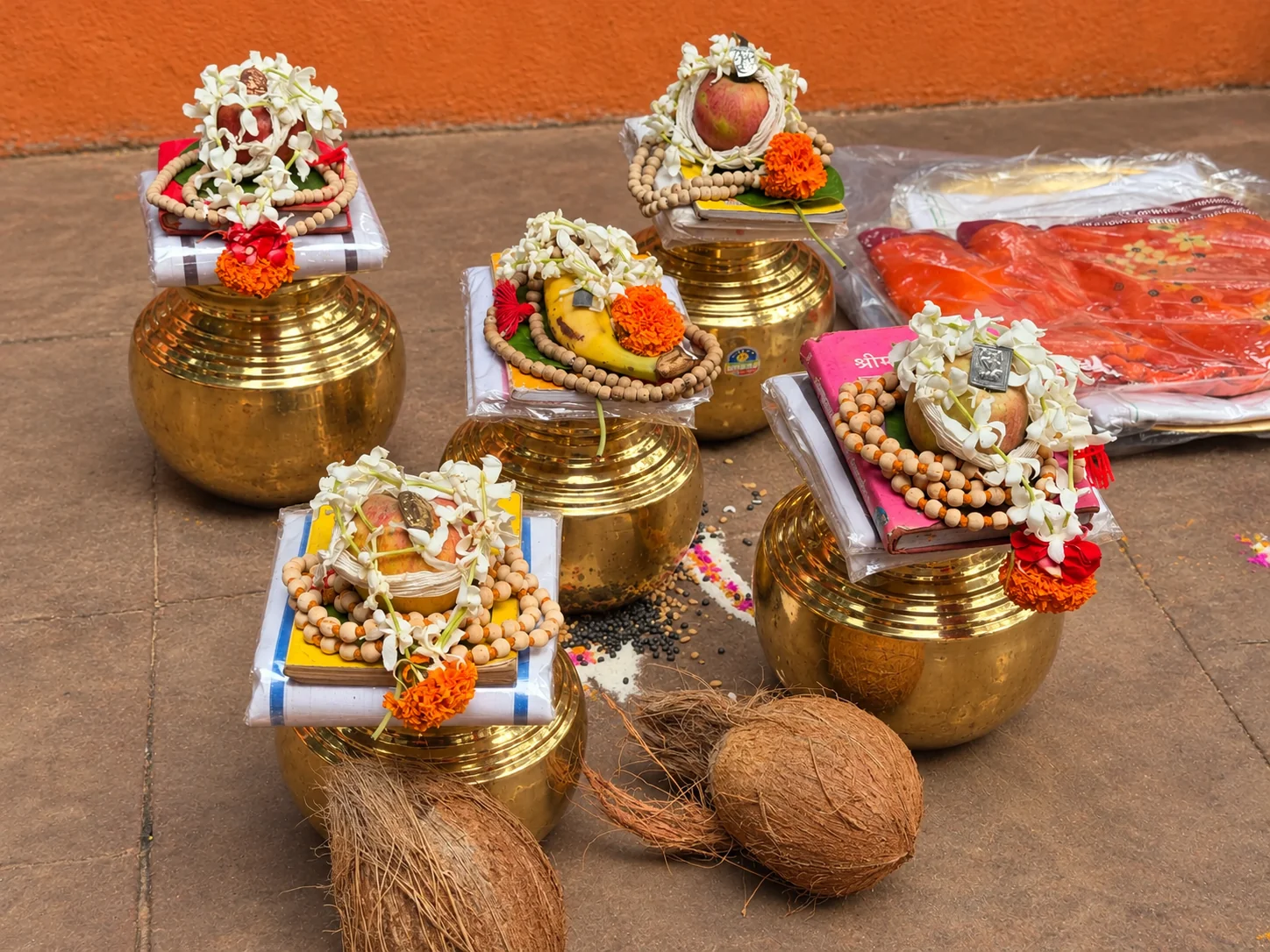
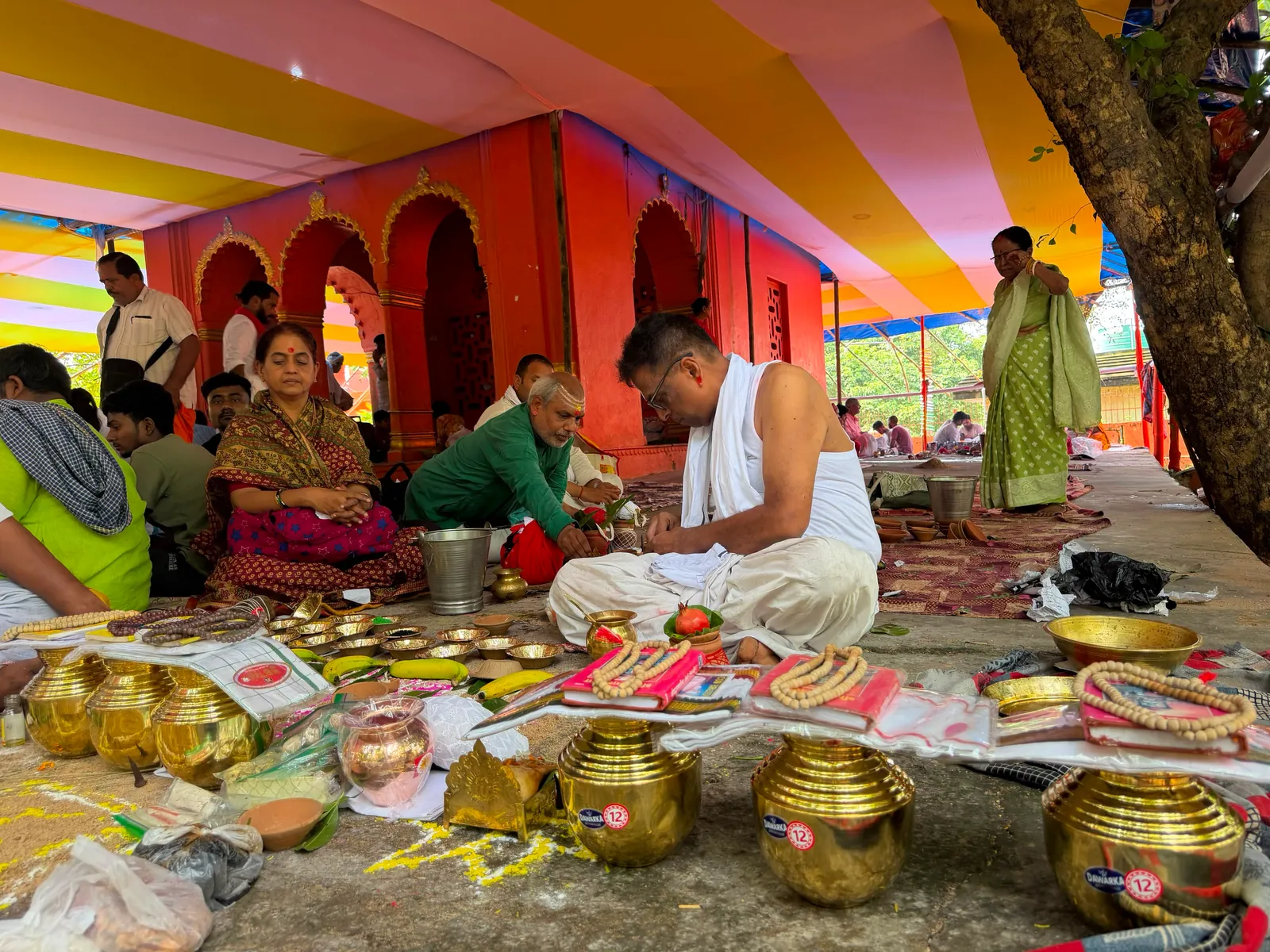
The five kalash represent Brahma, Vishnu, Mahesh (Rudra), Yama and Preta, the departed person for whom the rite is performed. Garuda Purana, Preta Kanda 40.36 describes their installation in separate vessels. The photograph shows this Panchkalash arrangement during Vistrit Narayan Bali in Gaya.
Read the scriptural sources and meanings
Original Sanskrit
ब्रह्मा विष्णुस्तथा रुद्रो यमः प्रेतश्च पञ्चमः ।
पृथक्कुम्भे ततः स्थाप्याः पञ्चरत्नसमन्विताः ॥Meaning
Brahma, Vishnu, Rudra, Yama and, fifth, the Preta are to be established in separate vessels furnished with five gems.
Narayan Bali in Gaya
The five kalash in our Gaya Narayan Bali arrangement represent Brahma, Vishnu, Mahesh (Rudra), Yama and Preta-the departed being for whom the rite is performed. This verse gives the scriptural basis for their installation in separate vessels.
Shodash Shraddha: the sixteen shraddha rites
Shodasha Shraddha refers to the sixteen post-death rites. During Narayan Bali, it fulfils the funeral and first-year rituals that could not be performed after an unnatural or untimely death. Both Pramukh and Vistrit Vidhi include Shodasha Shraddha. The elaborate form is needed in Vistrit Vidhi when those earlier rites were not performed, or the body was not found. If the sixteen customary shraddhas were already completed, Pramukh Vidhi is appropriate. Tell us what was performed so our pandits can guide your family. The photograph shows the preparations during Vistrit Narayan Bali in Gaya.
Narayan Bali cost: Pramukh and Vistrit Vidhi
Pramukh Vidhi costs ₹31,000 per family and is appropriate when the sixteen customary post-death shraddhas were already completed. Vistrit Vidhi costs ₹51,000 and includes an elaborate Shodasha Shraddha when the earlier funeral and first-year rites were not performed, or the body was not found. Both include samagri and dakshina. Pramukh takes about 4–5 hours; allow about one hour more for Vistrit. We confirm the appropriate vidhi, location and any separate travel or stay arrangements before booking.
Why perform Narayan Bali in Gaya?
Narayan is Lord Vishnu. In Gaya, Lord Vishnu is worshipped as Gadadhara, and Vishnupad is revered as his sacred footprint. Narayan Bali is offered to Narayan for the departed person’s peace and sadgati. Performing it in Gaya brings that offering to his sacred kshetra. Our Gayawal Pandaji conducts the vidhi at Dharmaranya or on the Falgu riverbank near Vishnupad.
Narayan Bali Puja in Gaya: location, procedure and duration
We confirm whether your puja will take place at Dharmaranya or on the Falgu bank near Vishnupad, along with the meeting point and starting time. Allow extra time for travel and any separately arranged rites; we explain the full schedule before you arrive.
What to wear for Narayan Bali
- Men: dhoti, banyan and gamcha. A white kurta-pyjama is also fine. Carry these separately and change into them for the puja.
- Women: a saree. Avoid black or green during the ritual.
- Bring or buy fresh clothes for the puja. These clothes are left behind after the rites.
- If a couple is taking part, carry a long dupatta for the gathbandhan.
Narayan Bali in Gaya: the Scriptural Basis
Narayan is Lord Vishnu, and Gaya is his sacred kshetra, revered for Gadadhara and Vishnupad. Narayan Bali here is offered to Narayan for the departed at Dharmaranya or on the Falgu banks. The Garuda Purana describes the rite; the Vayu Purana’s Gaya Mahatmya describes Gaya’s sacred connection with Vishnu and ancestral offerings.
- The Narayan Bali vidhi
- Garuda Purana, Preta Kanda 40 names the rite, describes worship before Krishna and tarpan for the departed, and sets out the five-kalash installation.
- Gaya as a Pitru-tirtha
- Vayu Purana, Gaya Mahatmya 49 describes ancestral offerings at the Falgu and praises Gadadhara and Vishnupad in connection with the ancestors’ liberation.
Gaya: the Sacred Kshetra of Lord Vishnu
Original Sanskrit
फल्गुतीर्थे नरः स्नात्वा तर्पणं श्राद्धमाचरेत् ।
सपिण्डकं स्वसूत्रोक्तं नमेदथ पितामहम् ॥Meaning
After bathing at Falgu tirtha, one should perform tarpana and shraddha with pindas according to one’s own sutra, and then bow to Pitamaha.
Narayan Bali in Gaya
The Falgu is a sacred place for snan, tarpan and pinda offerings in Gaya. We perform Narayan Bali at Dharmaranya or on the Falgu banks, bringing together Narayan pujan, tarpan and offerings for the departed under the guidance of a Gayawal Pandaji.
Original Sanskrit
आद्यो गदाधरो देवो व्यक्ताव्यक्तात्मना स्थितः ॥
विष्ण्वादिपदरूपेण पितॄणां मुक्तिहेतवे ।
एतद्विष्णुपदं दिव्यं दर्शनात्पापनाशनम् ॥Meaning
The text describes Adi-Gadadhara as present in manifest and unmanifest form, in the form of the sacred footprints of Vishnu and others for the liberation of the Pitrs; it praises the sight of this divine Vishnupad as removing sin.
Narayan Bali in Gaya
Narayan is Lord Vishnu, worshipped in Gaya as Gadadhara. The Gaya Mahatmya praises his presence at Vishnupad for the liberation of the ancestors. Narayan Bali in Gaya is offered to Narayan for the departed in this sacred kshetra.
See photographs of the five kalash and family puja in our Gaya ritual gallery.
See the arrangements and costs above. For questions about this rite or booking, contact us.
Narayan Bali photographs in Gaya
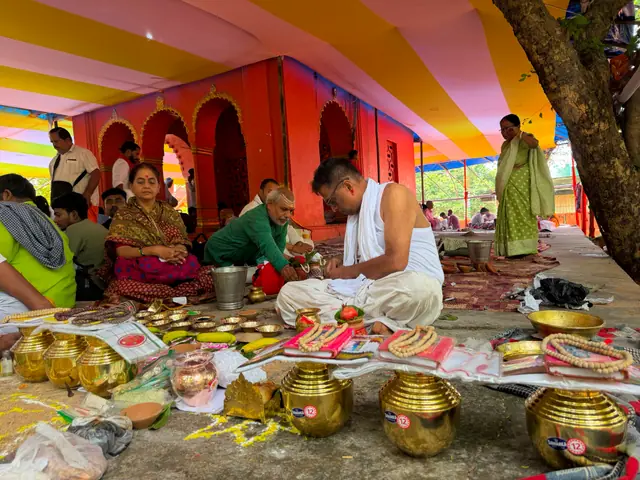
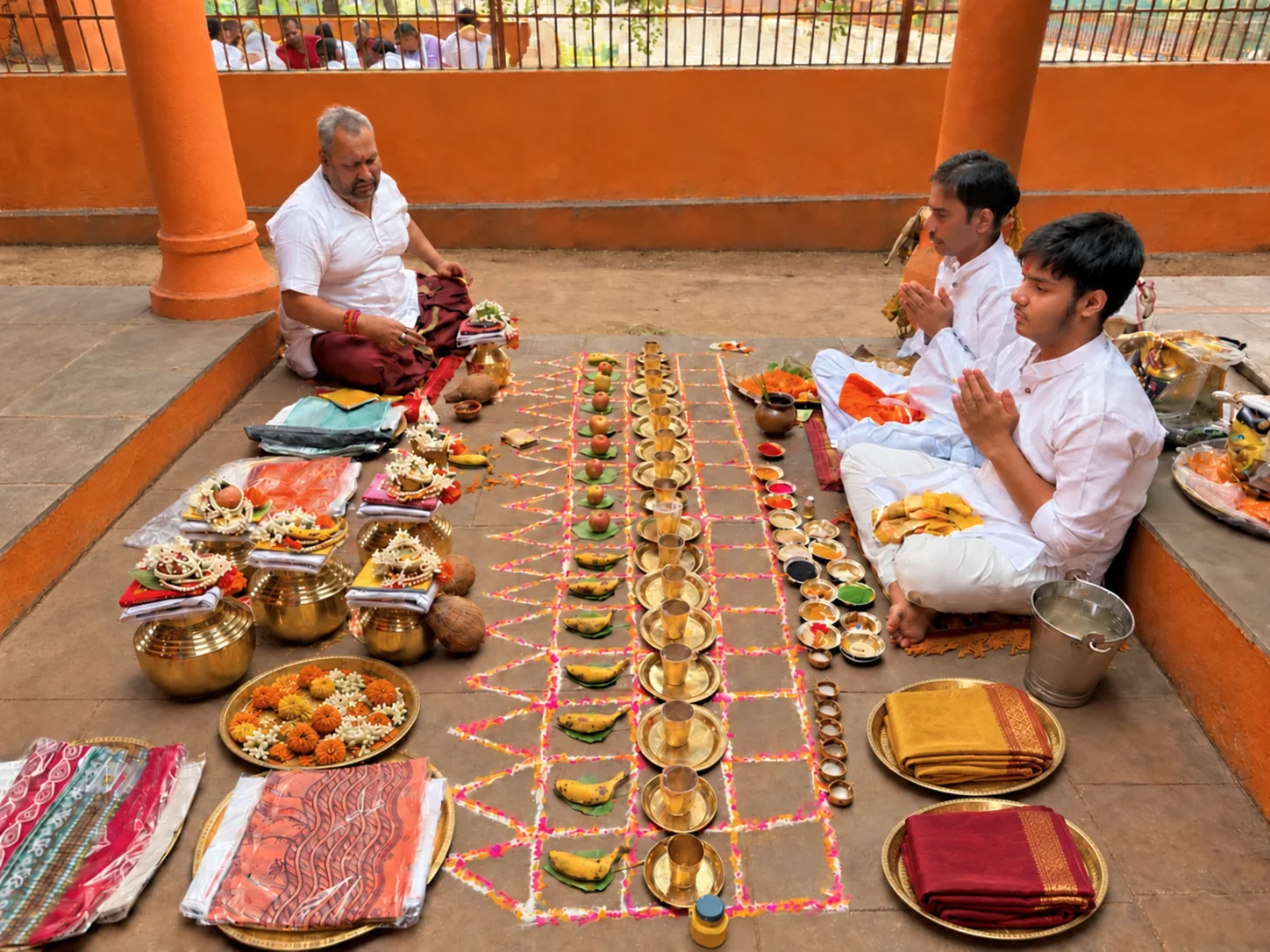
Vistrit Narayan Bali in Gaya - the purohit preparing the kalash offering before the karta, with the family seated at the vedi 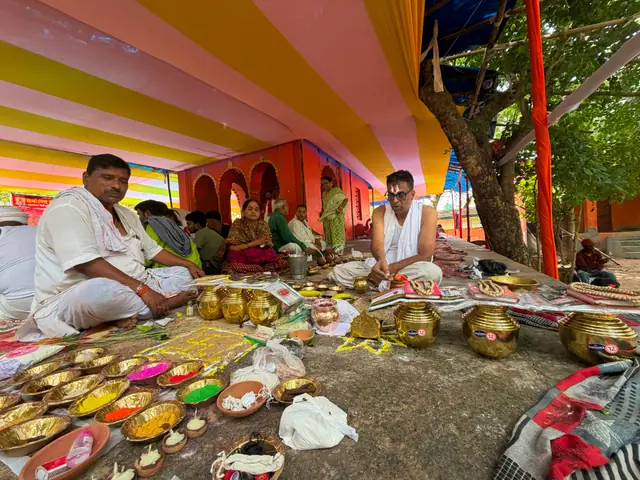
Vistrit Narayan Bali in Gaya - the karta at the vedi with the brass kalash, coloured powders in leaf bowls and prayer beads laid out
Tell us what you need
What Your Narayan Bali Arrangement Includes
What's included
- Vishnu pujan
- Panchkalash - five-kalash worship
See photo
Five kalash representing Brahma, Vishnu, Mahesh, Preta and Yama during Vistrit Narayan Bali in Gaya - Shodash Shraddha - sixteen shraddha rites
See photo
Shodash Shraddha preparations: vessels and offerings for the sixteen shraddha rites during Vistrit Narayan Bali in Gaya - Prescribed pratima vidhan
- Havan
- Pind Daan
- Pooja as per the shastras, full samagri and dakshina
- Invocation of Lord Narayan (Vishnu) with prayers for release from preta status and onward spiritual passage
- Preparation of the symbolic body or pinda, from the prescribed materials according to the Pandaji's paddhati, and its rites
- Complete samagri - pind ingredients, sesame, ghee, panchgavya and cloth
- Tarpan, sankalp and the prescribed mantra recitation
- Puja items - flowers, incense, ghee lamps and sacred thread
- Guidance through the multi-step vidhi over the required time by the Pandaji
- Asan (seating mats for the puja)
Gaya’s hereditary Gayawal priesthood
Gayawal Pandas are Gaya’s traditional pilgrimage priests. Ritual knowledge and relationships with pilgrim families pass from one generation to the next within these priestly families. Historical research documents this family-based priesthood in Gaya over centuries.
History of the Gayawal priesthood: Tirthankar Roy · The Journal of Asian Studies
Pandit in GayaQuestions families ask
Frequently asked questions
What is Narayan Bali?
Narayan Bali is a rite for one person who died an untimely death. It includes worship of Narayan, rites performed on a symbolic body, and Pind Daan for the departed.
Why is Narayan Bali done?
It is performed for the departed person’s sadgati after an untimely death, particularly where the prescribed rites were missed or incomplete. Tell us what has already been done so our pandit can advise your family.
What is the cost of Narayan Bali in Gaya?
The listed arrangements cost ₹31,000 per family for the Pramukh Vidhi and ₹51,000 for the Vistrit Vidhi, with samagri and dakshina included. Travel and stay are extra. Confirm the agreed amount before payment.
Can Narayan Bali be done in Gaya?
Yes. Narayan Bali is performed in Gaya by Gayawal Pandajis. Vayu conducts the rite at Dharmaranya or on the sacred Falgu riverbank near Vishnupad, with Narayan pujan, tarpan, pinda offerings, mantra recitation and havan for the departed person’s peace and sadgati.
What is included in both Narayan Bali arrangements?
Both include Vishnu pujan, Panchkalash, Shodasha Shraddha, the prescribed pratima vidhan, havan and Pind Daan, with sankalp, tarpan, mantra recitation, samagri and dakshina. The key difference is the elaborate Shodasha Shraddha in Vistrit Vidhi when earlier funeral and first-year rites were not performed, or the body was not found. Pramukh is appropriate when the sixteen customary shraddhas were already completed. Brahmin Bhojan is extra in either arrangement.
How long does Narayan Bali take in Gaya?
The Pramukh Vidhi takes about 4–5 hours. The Vistrit Vidhi takes about 1 hour longer.
What should I keep ready before requesting Narayan Bali?
Keep the reason for the ritual, family tradition, gotra if known, ancestor relation, preferred date, arrival point, number of people and stay requirement ready.
Is Narayan Bali the same as Narayan Nagbali?
Narayan Bali is performed for a departed person. Nag Bali is a separate rite associated with atonement for serpent killing; the combined observance is called Narayan Nagbali. Vayu performs Narayan Bali in Gaya. If your family has been advised to undertake both rites, discuss that advice with the Pandaji when planning your visit.
Why is Gaya significant for Narayan Bali?
Narayan is Lord Vishnu, worshipped in Gaya as Gadadhara. Vishnupad is revered as his sacred footprint. Narayan Bali in Gaya is an offering to Narayan for the departed in his sacred kshetra, guided by a Gayawal Pandaji.
Which scripture explicitly mentions Narayan Bali?
Garuda Purana, Preta Kanda (Dharma Kanda), chapter 40, verse 11 explicitly names Narayan Bali in its discussion of abnormal death. Verse 15 describes an offering before Krishna and tarpana for the departed. The linked Sanskrit text and its context are set out above.
Is Narayan Bali the same as Pind Daan?
No. Narayan Bali and Pind Daan are both pitru rituals, but they are not the same vidhi. The family context is recorded first and the Pandaji confirms what should be performed.
Can Vayu arrange Pandaji and samagri for Narayan Bali?
Once the Pandaji confirms the rite, Vayu arranges him, the samagri, the timing, the route and local support.
Start here
Narayan Bali - Talk to us
Tell us your family’s circumstances and the rites already performed. We explain the appropriate vidhi, how to prepare and what the ceremony includes. You receive the arrangements and cost in writing before booking.
Prefer to write?Send details insteadOpen this only if convenient. A call or WhatsApp is enough to begin.
Loading form…