No hidden cost
One clear price, confirmed before you pay — nothing extra asked at the ghat.
Falgu River is one of the core sacred places connected with Gaya Pind Daan and Tarpan. Vayu helps coordinate Pandaji guidance, samagri, timing and the route from Falgu to Vishnupad and Akshay Vat.
The ghats and temple get crowded and chaotic. For elderly families we arrange station pickup, a gentle pace, seating and rest, and someone with you through the whole day.
One clear price, confirmed before you pay — nothing extra asked at the ghat.
Real Gayawal Panda Jis — you know who performs the rite, never an anonymous agent.
Skip the station and street touts — every booking is arranged and verified by Vayu.
The Falgu, or Phalgu, is the river of Gaya where tarpan and Pind Daan are traditionally offered. It is revered as antah-salila — flowing hidden beneath its sandy bed. By tradition the day's ritual opens here with sankalp and tarpan before the family moves to Vishnupad and Akshay Vat.
It is said Mata Sita performed Pind Daan for King Dasharatha on the Falgu's banks, and the river bears her words to this day — which is why devotees revere the sands of the Falgu in the Gaya rite.
For much of the year the Falgu flows beneath its sandy bed; pilgrims dig a small hollow to reach the sacred water for tarpan, making the river itself part of the devotion.
Tarpan with water and black sesame at Falgu opens the Gaya Pind Daan sequence before the offerings at Vishnupad and the completion at Akshay Vat.
Falgu is where the practical shape of the pooja day becomes clear: river-bed conditions, seasonal changes, crowd movement and onward route timing.
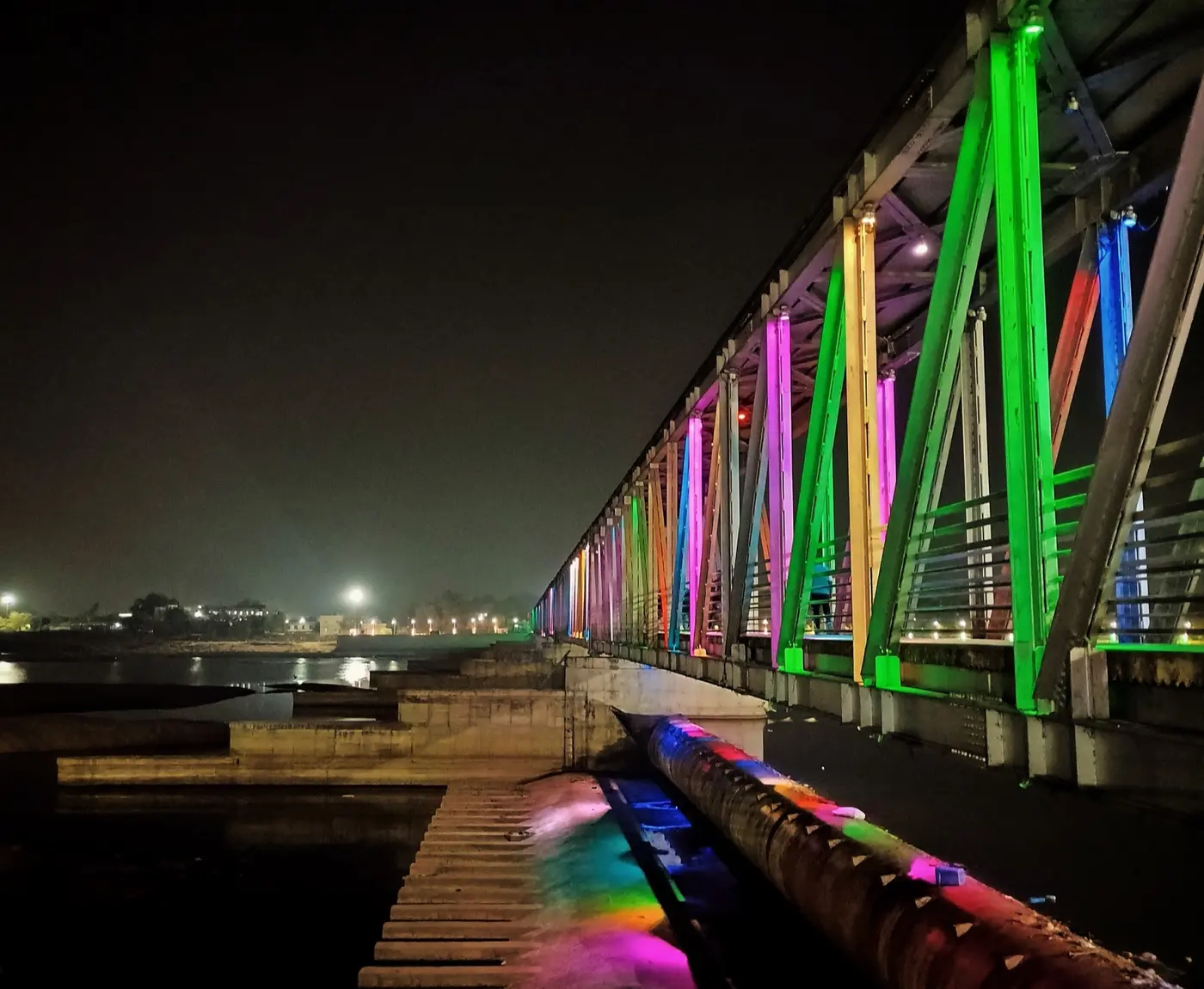
Image: Rubber Dam on the Phalgu river at night, Gaya, by Ayush Raj, Wikimedia Commons, CC BY-SA 4.0.
Falgu River tarpan commonly comes before Vishnupad Temple and Akshay Vat. The Pandaji confirms whether the route changes by date, crowd or family instruction.
The tarpan step is connected with sankalp context, samagri and where to sit or report. The exact vidhi is confirmed by the Pandaji.
Confirm elder seating, local movement, reporting point and where the family should wait after the tarpan step.
Do not assume the river stop is quick on peak days, do not arrive without a local contact, and do not leave the next stop's transport unclear.
Bihar Tourism's Pitripaksha information lists Phalgu River, Vishnupad Temple and Akshayavat among the sacred sites for Pind Daan. Before you arrive, clarify where to report, what samagri is required, how long the tarpan step may take and how the next stop is reached.
Falgu River is closely associated with tarpan and the sacred beginning of the Gaya Pind Daan route.
Pandaji, timing, samagri, local reporting, route order and elder support.
Falgu is commonly sequenced with Vishnupad Temple and Akshay Vat in one-day Gaya plans.
Vayu helps coordinate the day plan, contact person, local movement and package inclusions.
Use this page to understand the practical details before confirming a Gaya booking. The goal is to match the family situation with the right vidhi, clear inclusions and a reliable local contact.
The final amount depends on the selected ritual, Pandaji dakshina, samagri, date, number of people, transport and stay. Confirm inclusions before paying.
Share gotra if known, ancestor relation, family village or town, preferred date and arrival details so the Pandaji can confirm the suitable process.
The Pandaji confirms the exact vidhi, samagri and reporting point. Do not assume every ritual follows the same route or duration.
Many plans connect Falgu River, Vishnupad Temple and Akshay Vat. Local timing, crowd conditions and elder support should be planned in advance.
The Falgu ghat is central to the Gaya rite and the usual first stop of the day. River-bed conditions change with the season, so timing and footing matter — especially for elders.
Falgu River tarpan is commonly part of Gaya Pind Daan planning. The Pandaji confirms the suitable process.
Yes. Vayu can coordinate the route, timing, samagri and local movement with Pandaji guidance.
No. This guidance connects back to the same Pind Daan planning flow.